Saturday Leftover Day.
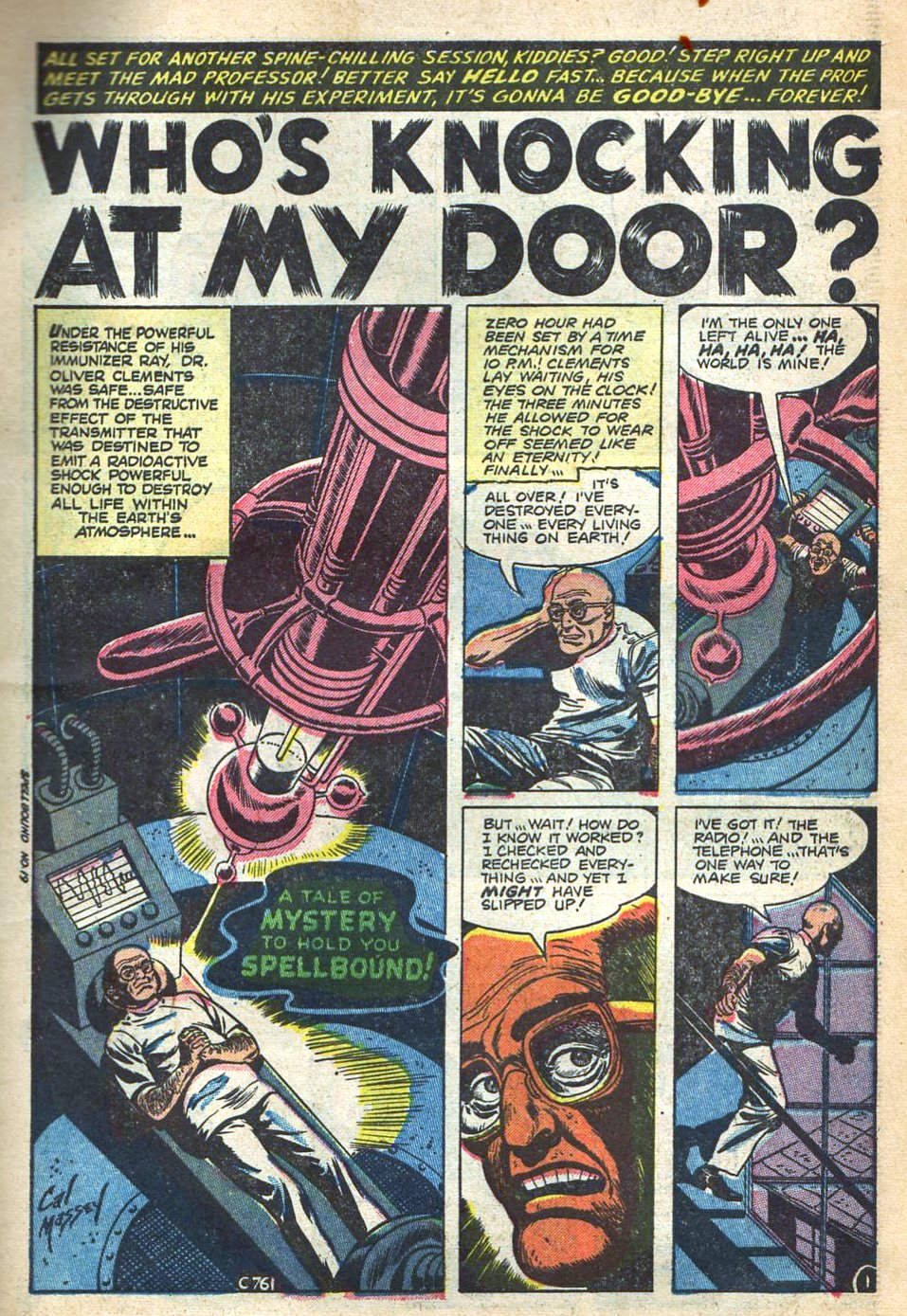
African-American visual artist Cal Massey had a dark secret. In his younger years, fresh out of art school, he worked in comics before becoming a respected artist. But he wasn't ashamed about it. On his blog (http://calmassey.blogspot.com/) he mentiones working for Stan Lee. I have shown a couple samples of his quite impressive work earlier, which you can find by following the link. Later in the fifties he went into illustration and advertising, working for the Saturday Evening Post, for instance. But he doesn't mention another sideline, which was much less respectful. In the late fifties he was a regular contributor to the Playboy wannabe After Dark, which was published by the Hugh Hefner wannabe Jim Warren. Warren was of course the later publishers of Famous Monsters of Filmland, Help, Creepy and Eerie - reponsible for the resurgance of comic book art in the sixties. Too bad that Massey had already found his niche as an artist by then, because he would have made a great addition.
Showing posts with label Cal Massey. Show all posts
Sunday, January 20, 2019
Saturday, January 07, 2017
Clueless Joe
Friday Comic Book Day.
Timely/Atlas star Joe Maneely did not always or only work for Stan Lee's outfit. He started at Street and Smith, where he worked alongside his hero Edd Cartier. In Alter Ego #105 (Roy Thomas' unmissable fanzine) African-American artist Cal Massey talks about Maneely and how he had a studio in the same building as the Hussian Art School he went to. Massay did some work (actually quite a lot) for an lesser known comic book publisher called Cross, mainly for their crime book The Perfect Crime. I have shown some of it in an earlier post. W In the interview Massey mentions that he also recommended Maneely to go to St. John's but I haven't found any of his work there yet. Was he misremembering Maneely's sale to The Perfect Crime?
Saturday, February 13, 2016
Equal Opportunity Employer
Friday Comic Book Day.
The more I see of Cal Masseys work the more impressed I am. Starting out at various small publishers, he soon landed at Timely/Atlas where he continued to do work for Stan Lee until well into the fifties. I guess he kept up his work as a painter, because although he did quite a few stories it was never as much as rgulars such as Gene Colan or Werner Roth. After his work in comics and illustration he became a full time painter. His most obvious trait to me would be his abillity to drawn human beings in all sorts of actions. he continued that in his work as a painter, although he seems to have drawn more and more on his heritage as a black or African-American man. Mr. Massey is still with us and does not disavow his comics background. On his blog (http://calmassey.blogspot.com/) you can see an overview of his career and there is a link to him talking about his latest more abstract work. A comic book artist worthy of more recognition, certainly as one of onbly a few African-American ones in a decade that still was struggling to find equality. He specialized in war books, which may explain the fact that much of his work is so unknown. If you follow the link, you will also see some of his pre Atlas work as well as one of his best stories ever, an almost silent war story with Stan Lee.
Friday, December 04, 2015
Hidden Talent
Friday Comic Book Day.
Cal Massey is an African-American artist whose work for Stan Lee in the fifties always impressed me. Stan sought him out for some of his selfwritten war stories and he always delivered. It never surprised me he went into art later in life, because he seems to have been a very competent figure artist. And although I have read the interview with him in Alter Ego, I had forgotten he drew for other companies as well. For Cross' Perfect Crime he even was the regular artist of the first story, as you can see here.
Subscribe to:
Comments (Atom)